
5 Signs Your Brakes Need to Be Replaced
May 4, 2026 · 5 min read
Squealing, a soft pedal, vibrations: your car warns you before it fails. Here are the 5 signs of brake wear you should never ignore.
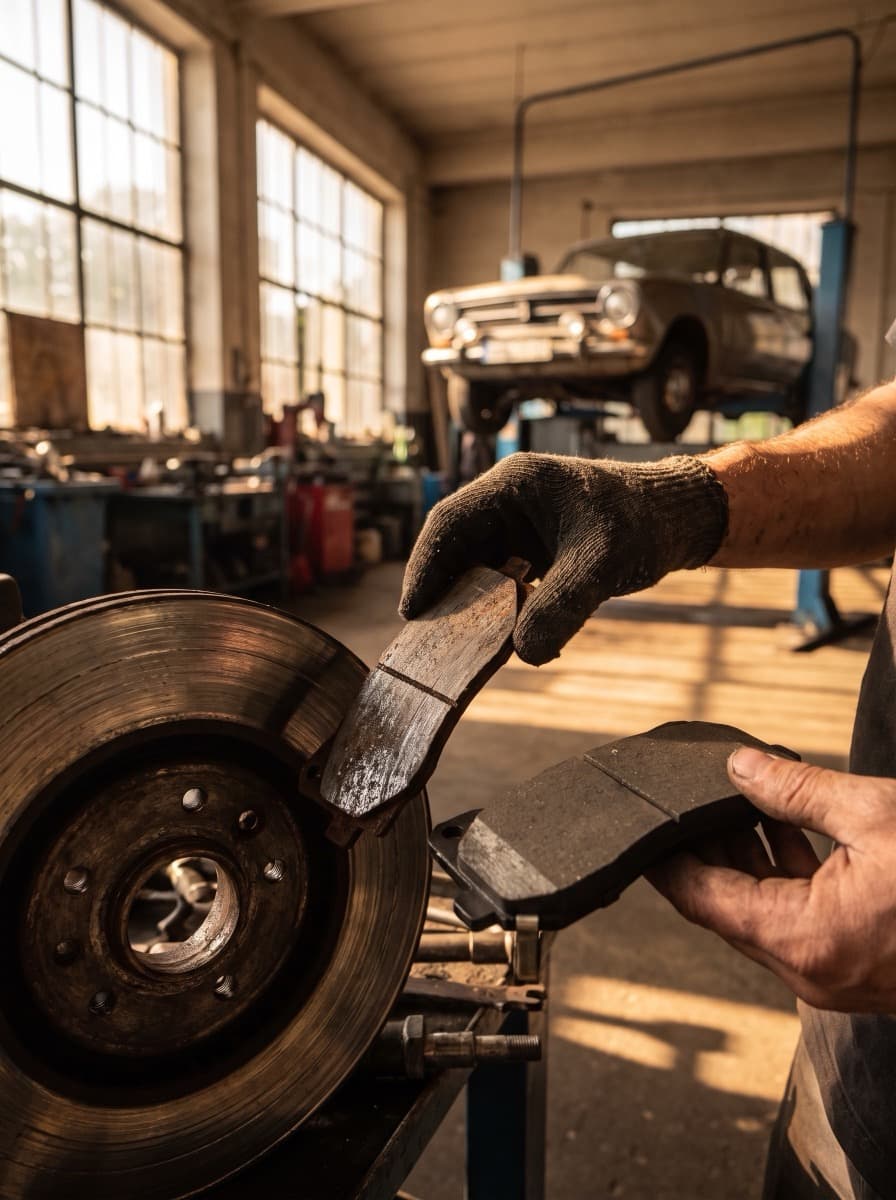
Brakes are the most important safety system in your vehicle. The good news: they almost always give warning signs before they fail. Here are the five alarm signals to know — and why you should never wait.
1. A high-pitched squeal or screech
Most brake pads have a metal wear indicator that produces a high-pitched squeal when they get too thin. That sound, especially under light braking, is the first sign they need replacing.
2. A deep metallic grinding
If the squeal turns into metal-on-metal grinding, the pads are completely worn and the backing plate is rubbing directly on the rotor. At that point you're damaging the rotors with every stop — and the repair gets far more expensive.
3. Vibration in the pedal or steering wheel
A pedal that shudders under braking often points to warped rotors deformed by heat. Braking becomes less effective and the car less stable.
4. A soft pedal or one that sinks
A spongy pedal, or one that drops too far, can reveal air in the lines, worn brake fluid or a leak. It's one of the most dangerous signs: have the vehicle inspected without delay.
5. The car pulls to one side when braking
If the vehicle veers left or right when you brake, the pad wear is likely uneven or a caliper is seized. Fix it quickly to keep control.
On average, brake pads last 40,000 to 70,000 km, but city driving and Québec winters accelerate wear. At the slightest doubt, have your brakes checked.
Get your brakes inspected near you
A brake problem won't fix itself later. Submit your request on UnyCars: describe the symptom, and garages in your area offer a quick inspection and replacement.